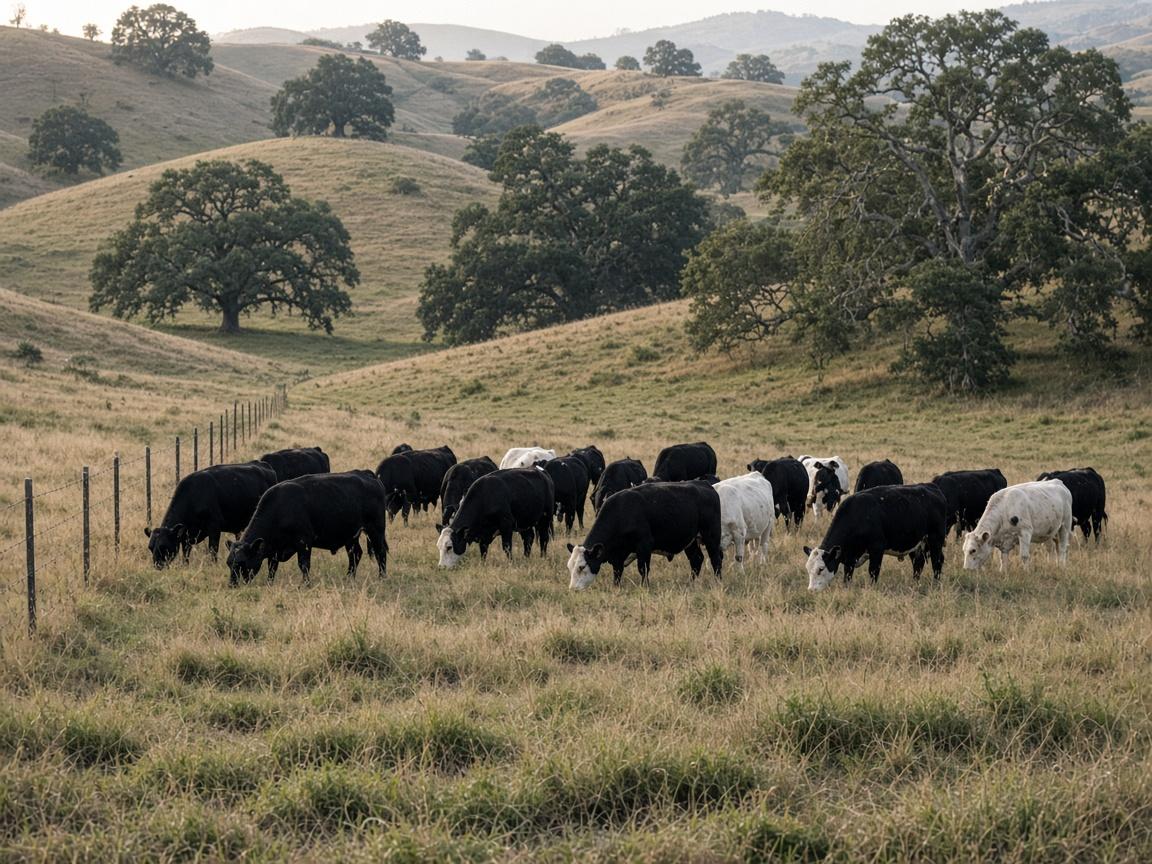
Cattle
Grass and herbaceous fine-fuel management, where forage and terrain are suitable.

Ranch PRO / Fire.
Landscape-scale livestock grazing, integrated water infrastructure, and regional wildfire resilience.
Ranch PRO is developing a new model for professional wildfire fuels management: large operating territories, commercially productive livestock herds, measurable vegetation outcomes, and shared infrastructure that serves both agriculture and emergency response.
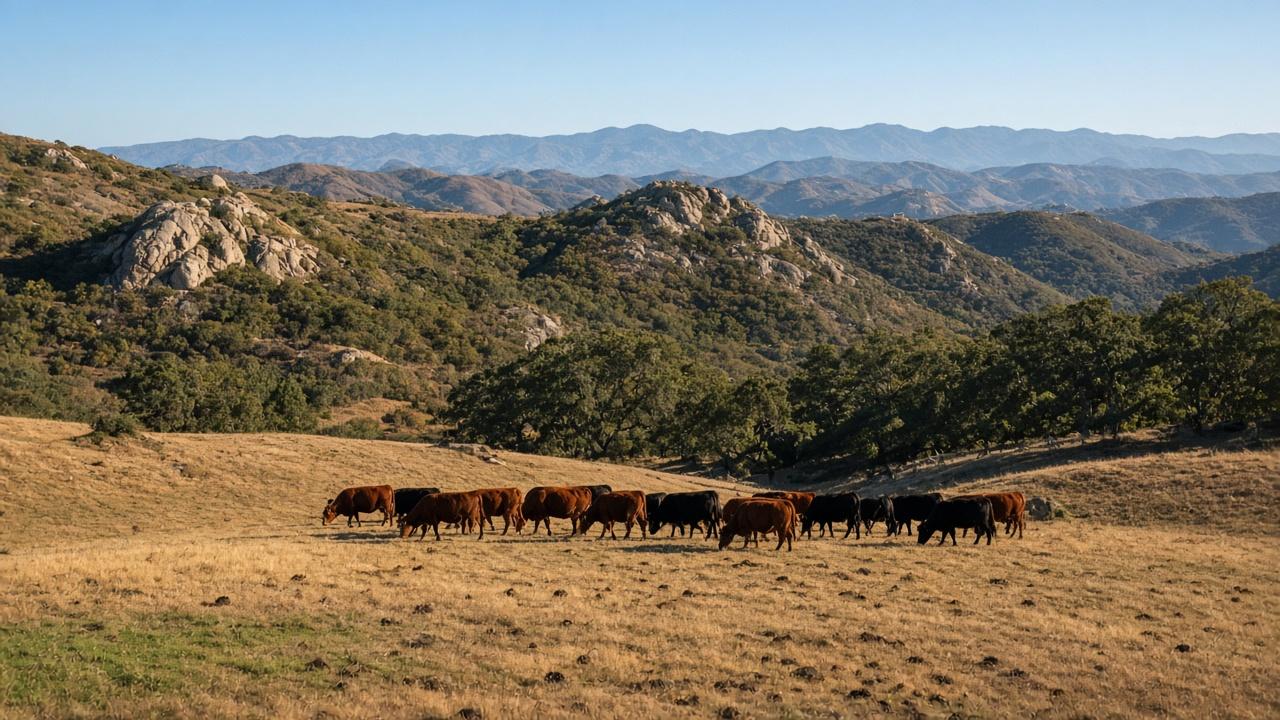
Short-duration targeted grazing treats a small area, then the animals leave. Fire. is being built for a different job: a herd that stays in a region, on a territory large enough to plan a season, under a relationship that lasts more than one project.
| Conventional targeted grazing | Ranch PRO landscape-scale model |
|---|---|
| Small, isolated treatment areas | Large, coordinated operating territories |
| Frequent livestock mobilization | Longer seasonal deployment |
| Short-term project contracts | Multiyear operating relationships |
| Primarily vegetation-service economics | Combined livestock and service economics |
| Limited infrastructure continuity | Durable regional infrastructure |
| Project-by-project deployment | Sustained operating capability |
Small-scale targeted grazing remains valuable for specific applications. Fire. is meant to complement that work, not to discredit it.
Species follow the vegetation, the terrain, and the treatment objective. They are not interchangeable, and they are not a universal prescription.
Grass and herbaceous fine-fuel management, where forage and terrain are suitable.
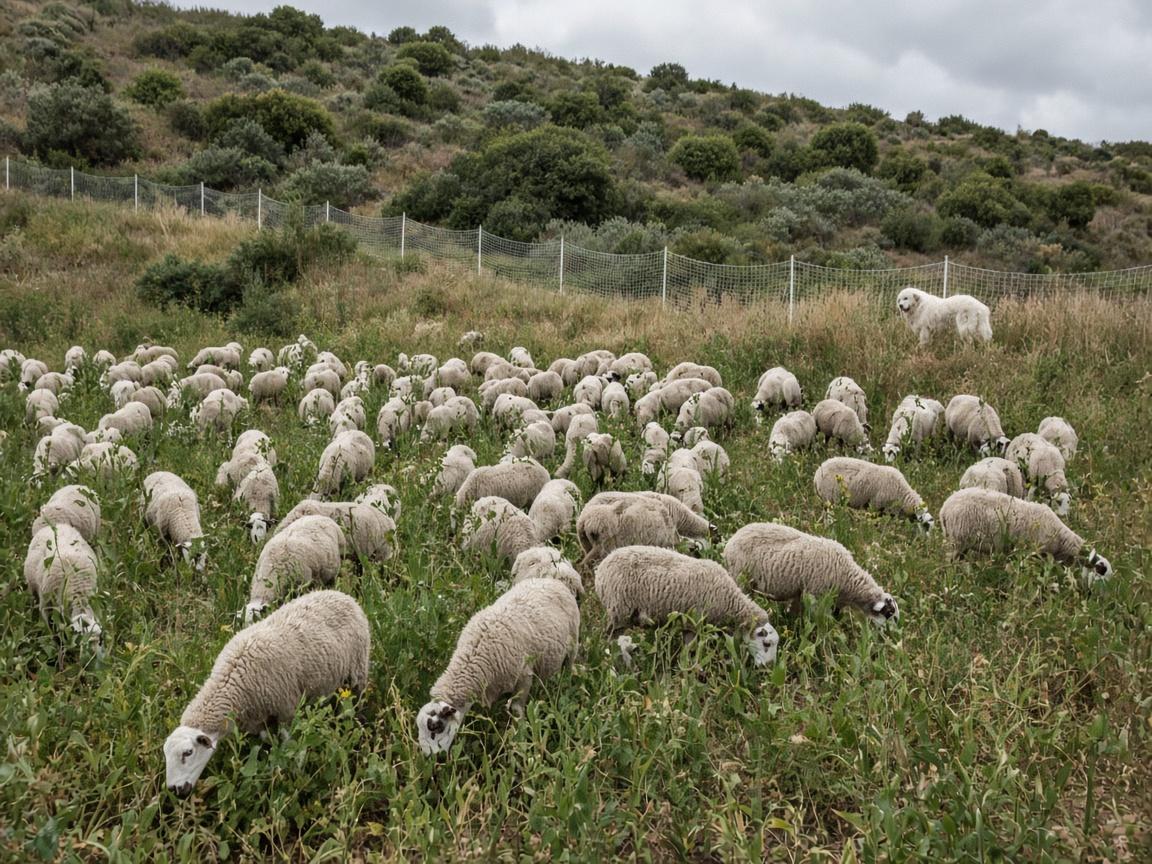
Selected grass, forb, and mixed herbaceous vegetation treatments.
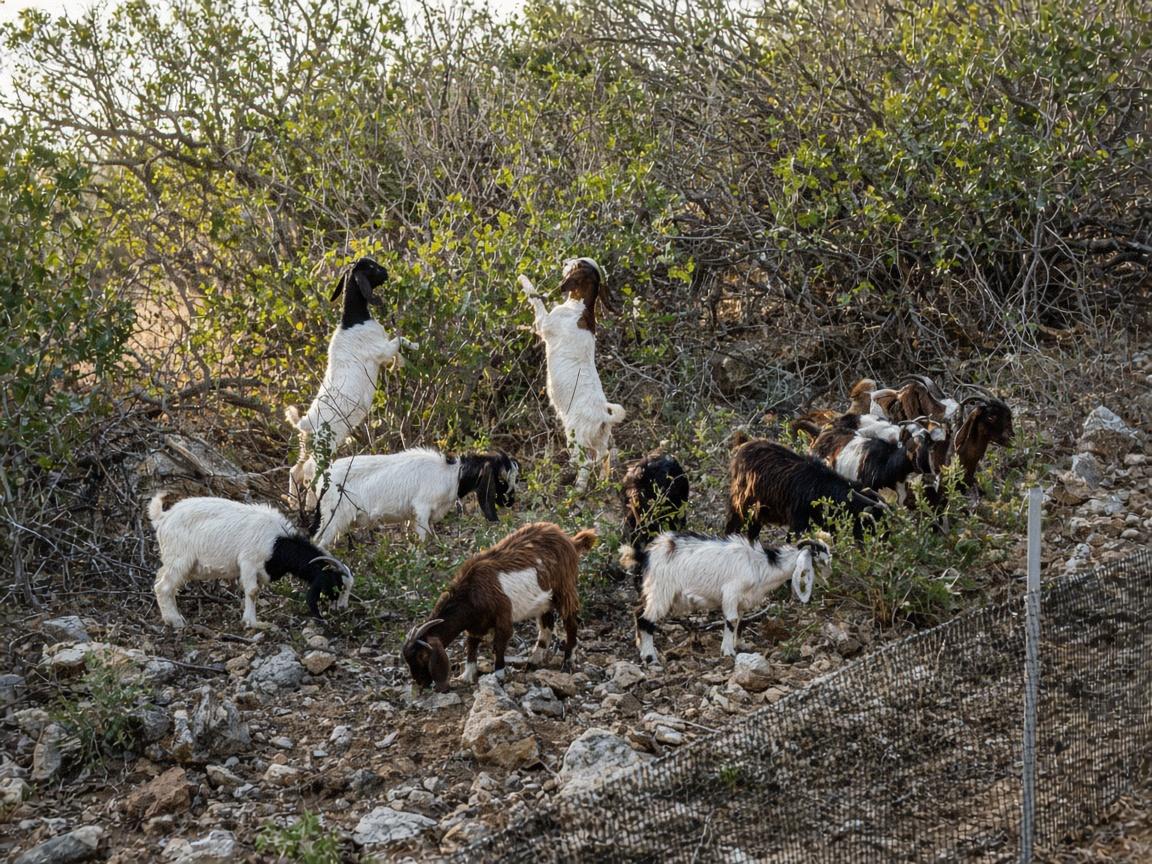
Browse-oriented management of suitable shrubs, regrowth, and accessible woody vegetation.
Species selection has to rest on ecological suitability, authorized forage use, animal welfare, and the treatment outcome that can actually be achieved.
Ranch PRO does not claim that goats can economically remove mature chaparral at landscape scale. A claim of that kind would need site-specific evidence, and none is published here.
Stock water is already how a herd stays on a landscape. The same storage, if it is designed and approved for the purpose, can also give firefighters a place to draw water. That second use is potential. It is not an existing network of approved emergency water points.
A tank or reservoir that waters livestock and also keeps a fitting, and a reserve, for an engine. The reserve is only real if the design holds it back from everyday use.
A larger water body can be studied for helicopter use. Aviation suitability, approach, and agency acceptance are separate questions. Ranch PRO does not publish any site as an approved dip location.
Several smaller points, once approved, could be mapped by the fire agency that would actually use them. Mapping is that agency’s process. This site does not publish nonpublic facility locations.
Ranch PRO has established a collaboration with NOMAD to develop shared-use backcountry water infrastructure: stock water for grazing, a fire suppression water supply, and heli dip tanks. The goal is infrastructure that works for the land, the livestock, and community fire risk reduction at the same time, with each site still going through the same suitability and agency approvals before it is used for firefighting.
Firefighting suitability, emergency reserves, water rights, and regulatory approvals each need independent verification. A ranch water system is not a fire-agency water source until those reviews say so.
A commercial herd has to eat on a schedule the animals can live with. The operator needs grazing access that can be planned, not a string of short jobs separated by trucking.
Moving livestock over and over among disconnected parcels raises operating cost and makes it harder to keep people, water, and animals in the same region. Multiyear contracts, larger territories, and predictable demand are how a regional capability can stay in place.
Livestock production is an economic foundation of this model, not an incidental byproduct. This page does not state profitability, and it does not state a wildfire-loss figure. Those numbers are not published because they are not verified here.
Ranch PRO is based at Morning Star Ranch in Boulevard, California.
RANCH PRO / FIRE. / POLICY SERIES 01
A procurement and infrastructure framework for landscape-scale grazing, rural agricultural capacity, and regional wildfire resilience.
Wildfire resilience is an ongoing land-management problem as well as an emergency-response problem. Managed livestock can help reduce fine fuels and maintain previously treated landscapes, and California's vegetation-treatment framework already includes prescribed herbivory. The open question is institutional: how can governments buy this capability at a scale, duration and price that lets professional livestock operations sustain it?
This paper proposes a regional model that joins multiyear vegetation-treatment services, productive livestock enterprises, and water infrastructure designed to serve both agriculture and emergency response. Public buyers would pay separately for verified treatment, justified readiness, and approved dual-use infrastructure, with independent monitoring and a risk model that separates measured outcomes from modeled benefits.
It is candid about limits: grazing does not replace prescribed fire or mechanical treatment, mature chaparral is a poor fit, and a public contract grants no grazing rights on public land. A phased feasibility pilot in eastern San Diego County is proposed. It is a policy proposal for discussion, not an existing program, permit or agreement.
Fire. is looking for institutional and commercial partners. An inquiry is a conversation, not an award, a permit, or a contract.